
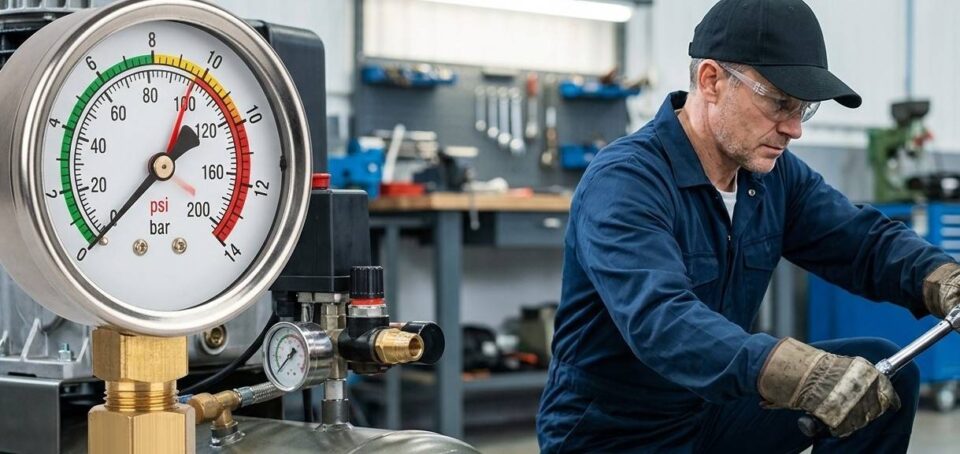
If you are stepping into the world of air compressors, you will quickly realize that PSI (Pounds per Square Inch) is the backbone of your entire system. It is not just a number on a label. It directly determines how efficiently your compressor performs, how long it lasts, and how reliably it supports your operations.
What is PSI in an Air Compressor?
In simple terms, PSI measures the pressure of compressed air stored and delivered by your compressor. It indicates how much force the air can exert when released through the system.
In compressor systems, you will commonly come across two types of PSI:
- PSIG (Gauge Pressure): The most commonly used measurement. It shows pressure relative to atmospheric pressure and is what your compressor gauge displays.
- PSIA (Absolute Pressure): Measures pressure against a perfect vacuum. This is mainly used in technical calculations and system design.
Why PSI is Critical for Compressor Performance
PSI is not about running your compressor at the highest possible setting. It is about operating at the correct pressure level for optimal performance.
Efficient Operation
Running your compressor at the right PSI ensures smooth airflow and consistent output. Too low, and your system underperforms. Too high, and you stress internal components.
Equipment Longevity
Excess pressure puts unnecessary strain on valves, seals, and internal parts. Over time, this leads to faster wear and costly maintenance.
System Stability
Maintaining the correct PSI prevents pressure fluctuations, ensuring a steady and reliable compressed air supply throughout your system.
Energy Savings
Higher PSI requires more power. Even a small increase in pressure can significantly raise energy consumption. Optimizing PSI helps reduce electricity costs and improves overall efficiency.
PSI and Airflow: Understanding the Balance
While PSI defines pressure, airflow plays an equally important role in compressor performance.
Think of it this way:
- PSI provides the force
- Airflow (CFM) ensures consistent delivery
A compressor must maintain both the required pressure and adequate airflow to operate efficiently. If either is insufficient, performance drops and the compressor works harder than necessary.
How to Choose the Right PSI for Your Compressor
Selecting the correct PSI setting depends on your compressor system and application. Here are a few practical guidelines:
Follow Manufacturer Specifications
Always refer to your compressor’s recommended pressure range. Operating outside this range can reduce efficiency and damage the system.
Avoid Over-Pressurizing
Running your compressor above required PSI does not improve performance. It only increases energy usage and accelerates wear.
Account for Pressure Drops
Air loses pressure as it travels through pipes and hoses. Setting your compressor slightly above the required level helps maintain consistent output at the point of use.
Adapt to Working Conditions
Environmental factors such as temperature, humidity, and altitude can affect compressor performance. Adjust PSI accordingly to maintain efficiency.
Pro Tips for Optimizing Compressor PSI
- Maintain a small pressure buffer (around 10 to 20 percent) to handle system losses
- Regularly check pressure gauges for accuracy
- Inspect for leaks in hoses and fittings to prevent pressure loss
- Service your compressor periodically to maintain consistent pressure output
Final Thoughts
Understanding PSI is essential for getting the best performance out of your air compressor. It is not about maximizing pressure but about optimizing it for efficiency, durability, and reliability.
By setting the correct PSI and maintaining your system properly, you ensure smoother operations, lower energy costs, and a longer lifespan for your compressor.
